
March 17, 2026 - by Hardik Patel
Most organizations don’t have a data problem. They have a trust problem, and Artificial Intelligence (AI) is making that gap impossible to ignore.
Imagine what happens when finance, operations, and sales report different numbers in the same executive meeting. Or when an audit exposes unclear ownership of sensitive information. Or when promising AI initiatives stall because data is inconsistent, poorly classified, or lacks a traceable lineage. These are not minor inefficiencies. They are strategic risks.
As finance platforms, operational systems, and cloud applications continue to expand, the volume and velocity of enterprise data grow exponentially. Without structured data governance solutions, duplication, inconsistency, unauthorized access, and regulatory exposure increase just as quickly.
If you expect AI to deliver measurable business impact, governance must move beyond static policy documents. Read how modern data governance solutions, supported by integrated data management services, create the trust, control, and transparency required to transform raw data into a competitive advantage.
The Hidden Cost of Poor Data Governance
Poor governance rarely creates immediate disruption. Instead, it slowly erodes confidence, efficiency, and agility across the enterprise. It usually emerges from:
- Conflicting Business Metrics: When teams rely on inconsistent definitions and disconnected systems, leadership meetings turn into reconciliation exercises. Trust declines because no one is confident that the numbers align.
- Increased Compliance Exposure: Sensitive data often resides in more systems than expected. Without classification and centralized oversight, regulatory audits become reactive and high-risk.
- Delayed Analytics and AI Initiatives: Analysts and data scientists spend excessive time cleaning and validating datasets. Innovation slows because foundational data issues remain unresolved.
- Rising Infrastructure Costs: Duplicate, outdated, and unused data consumes storage and processing resources. Over time, unmanaged growth inflates technology budgets without delivering value.
Why Modern Enterprises Need Governance Now
Modern data governance solutions reduce these risks by creating accountability and consistency across the data lifecycle.
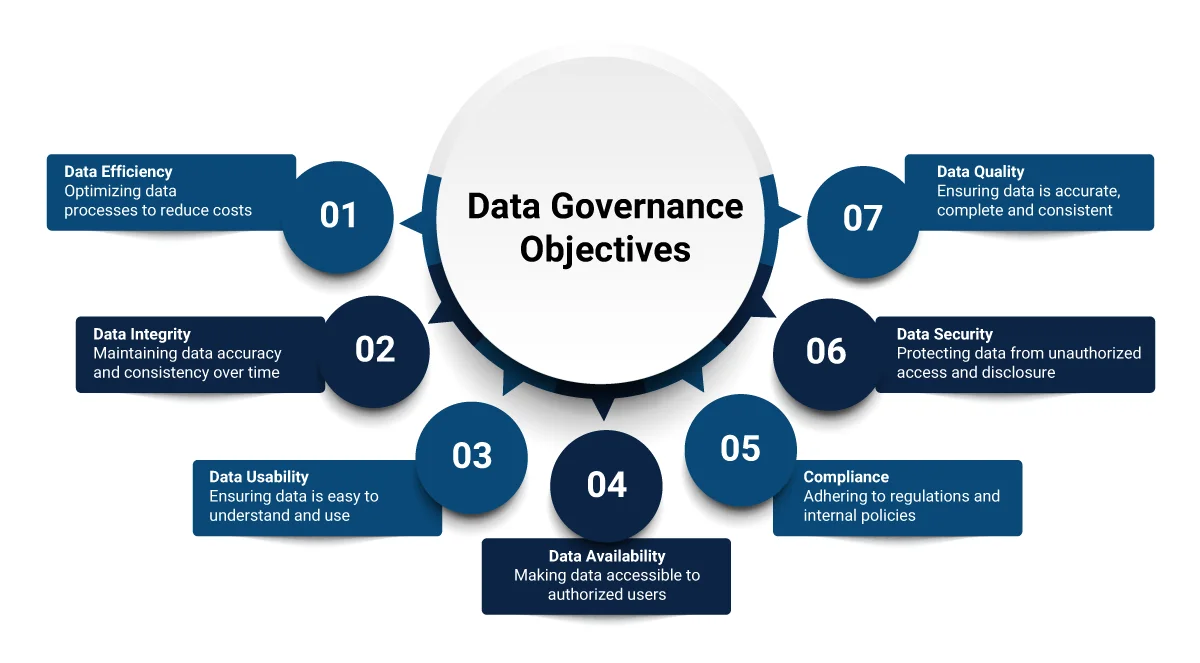
Robust data governance ensures:
- Data is Trusted Across the Enterprise: Standardized definitions and lineage tracking eliminate ambiguity. This enables executives to gain confidence in dashboards and performance metrics.
- Sensitive Information is Protected by Design: Classification and role-based access controls embed security into everyday operations. This ensures protection becomes proactive rather than reactive.
- Decisions are Data-driven: When data is discoverable and reliable, teams spend less time validating inputs and more time driving outcomes.
What High-maturity Organizations Do Differently
Organizations with strong governance treat it as a strategic capability rather than a technical project. They align governance to measurable business objectives and integrate it directly into their operating model. High-maturity organizations ensure:
- Clear Accountability Across Domains: Data owners and stewards are formally assigned to customer, financial, and operational domains. Responsibility is visible and measurable.
- Embedded Governance Within Platforms: Policies are technically enforced across cloud and on-premises environments. Governance is automated wherever possible.
- Continuous Monitoring and Improvement: Metrics such as data quality scores, compliance adherence, and usage patterns are tracked consistently. Governance evolves alongside the business.
Core Capabilities of Effective Data Governance Solutions
Effective governance requires more than documentation. It demands coordination between people, processes, and enabling technologies that operationalize policy enforcement and visibility.
Core capabilities include:
- Ownership and Stewardship Models: Defined roles clarify who is responsible for quality, security, and access approvals. This reduces confusion and strengthens accountability.
- Enterprise Data Quality Management: Automated validation rules and monitoring dashboards ensure accuracy and completeness. Issues are identified early and resolved systematically.
- Sensitive Data Discovery and Classification: Continuous scanning identifies where regulated or confidential data resides. Proper classification supports risk reduction and compliance readiness.
- Metadata Management: A centralized catalog improves transparency and discoverability. Business users can understand lineage, definitions, and context before using data.
- Policy Enforcement and Access Control: Centralized governance controls apply consistent masking, permissions, and audit logging. This ensures compliance without slowing productivity.
Building a Practical Governance Roadmap
Launching governance initiatives without clear alignment often leads to stalled momentum. A practical roadmap connects governance investments directly to measurable business outcomes.
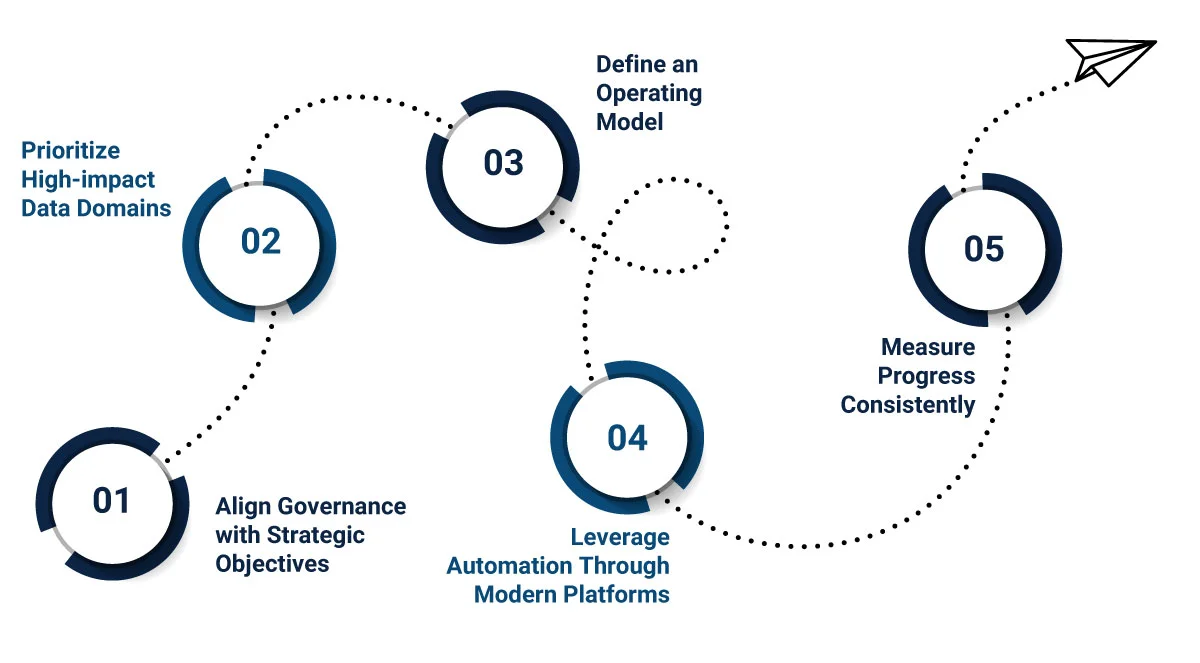
- Align Governance with Strategic Objectives: Clear alignment drives executive sponsorship. Define whether the primary goal is compliance, analytics acceleration, AI enablement, or cost optimization.
- Prioritize High-impact Data Domains: Early wins build credibility. Start with domains that influence revenue reporting or regulatory exposure.
- Define an Operating Model: Governance must fit within existing organizational structures. Establish roles, responsibilities, and escalation paths accordingly.
- Leverage Automation Through Modern Platforms: Use governance technologies to automate discovery, classification, and enforcement, and reduce manual overhead.
- Measure Progress Consistently: Continuous improvement ensures long-term success. Track quality metrics, adoption rates, and compliance indicators.
Turning Governance into Business Value
Many organizations underestimate the operational and financial impact of unmanaged data until audits fail, reports conflict, or AI initiatives stall. Data governance, when embedded as an enterprise capability, strengthens decision-making and reduces unnecessary risk.
Synoptek delivers agile data governance solutions tailored to modern hybrid environments. Our approach integrates continuous sensitive data discovery, centralized policy enforcement, and seamless alignment with existing data management solutions.
By decoupling security and access policies from underlying infrastructure, Synoptek helps organizations enforce consistent controls without disrupting innovation. Governance becomes streamlined, measurable, and aligned with business objectives.
Take the Next Step
If your organization is modernizing its data platform, expanding analytics, or accelerating generative AI adoption, now is the time to evaluate whether your current governance framework supports growth or limits it.
Engage Synoptek to assess your governance maturity and design a roadmap aligned with your strategic priorities. Take action today to turn your data into a long-term competitive advantage.
About the Author

Hardik Patel is a Technical Lead in Data Engineering & Business Intelligence with strong expertise in modern data platforms and analytics solutions. He specializes in Python, PySpark, Fabric ,Azure Data Factory, Azure Synapse Analytics, Power BI, and Microsoft Purview (Data Governance), enabling organizations to build scalable, secure, and insight-driven data ecosystems. With hands-on experience in data architecture design, ETL/ELT development, and enterprise data strategy, Hardik plays a key role in transforming complex data into meaningful business insights.
Frequently Asked Questions
Organizations lack reliable data governance solutions, leading to inconsistent, duplicated, and poorly classified data despite strong data management solutions.
Weak governance increases compliance risks, inflates costs, and delays AI initiatives due to unreliable data and ineffective data management services.
Modern data governance solutions ensure data quality, lineage, and security, allowing AI and analytics to operate on trusted, well-managed datasets.
High-maturity programs combine automated controls, clear ownership, and integrated data management services to ensure continuous data quality and compliance.
They should align data governance solutions with strategic priorities, focus on high-impact domains, and leverage scalable data management solutions for measurable outcomes.