
Remove Legacy Barriers to Speed, Scale, and Innovation
Legacy systems can slow innovation, create workflow friction, and limit performance and scalability, putting business operations at risk. Without enterprise application modernization, organizations face challenges such as rapid growth exposing system bottlenecks, evolving regulations increasing security and compliance pressure, and outdated integrations that limit agility, making it difficult to deliver fast, seamless experiences or adapt quickly to new business needs.

Scaling Strains Systems
Rapid business growth exposes performance bottlenecks, scalability gaps, and operational inefficiencies.

Security and Compliance Gaps
Evolving regulations and threats challenge organizations to maintain robust governance and protection.

Legacy Integrations Block Agility
Outdated integrations slow innovation and make it difficult to adapt systems or deploy new capabilities quickly.
Application Modernization Services That Improve Experience and Resilience
Synoptek’s legacy application modernization services combine UX modernization with architectural uplift, delivering faster, more scalable, and future-ready systems. Powered by Synoptek’s aiXops platform, we establish measurement baselines and validate improvements through performance metrics and usability testing, ensuring every enhancement drives measurable business value and an improved user experience.

Legacy System Assessment
Uncover hidden risks, inefficiencies, and technical debt using AI-powered analysis to create a clear roadmap for strategic modernization and accelerated business value.

Application Refactoring
Refactor existing applications for peak performance, easier maintenance, and extended lifecycle using AI-driven code analysis, unlocking agility without a full rewrite.

Re-platforming and Migration
Seamlessly move applications to modern, cloud-ready platforms to boost scalability, reliability, and operational efficiency while minimizing disruption.

Re-engineering and Redevelopment
Transform outdated systems into high-performing, feature-rich applications using AI-assisted development and intelligent automation, and ensure alignment with evolving business goals and customer expectations.

Cost Optimization
Maximize IT value by cutting unnecessary operational and licensing costs while driving long-term efficiency and ROI.
The Synoptek Advantage
Synoptek combines deep expertise and proven application modernization strategies to help organizations accelerate enterprise application modernization and achieve measurable business outcomes. Through structured legacy application modernization services, AI-driven delivery, and proven frameworks, we help IT teams reduce technical debt, improve system performance, and focus on innovation rather than maintaining outdated systems.
21%
Cloud Cost Savings from Migration
30%
Reduction in Operational Costs
95%
Performance Improvement with Cloud-Native Modernization
35%
Lower Infrastructure Maintenance Costs
Application Modernization Strategies for Every Industry
What sets our application modernization services apart is our ability to translate partner innovation into real business outcomes. Our deep partner relationships, combined with hands-on expertise and outcome-driven delivery, ensure technology investments deliver measurable value today and into the future.

Financial Services
Strengthen security and compliance through strategic legacy modernization.
Learn More Financial Services
Healthcare
Upgrade healthcare systems through application refactoring and re-engineering.
Learn More Healthcare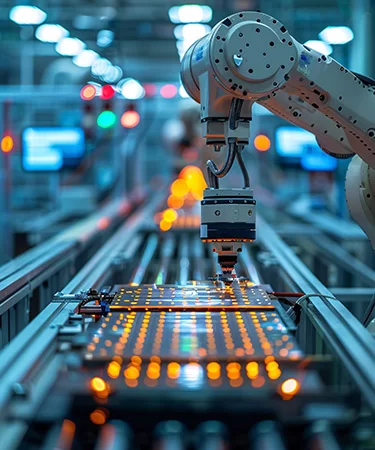
Manufacturing
Improve efficiency through legacy modernization across production systems.
Learn More Manufacturing

Transportation and Logistics
Modernize logistics and fleet management systems for scalability.
Learn More Transportation and LogisticsInnovative Perspectives in Application Modernization