
October 16, 2026 · by Synoptek Team 6 min read
IT Asset Management (ITAM) is a structured approach to tracking, managing, and optimizing an organization’s hardware, software, licenses, SaaS applications, and other technology assets throughout their lifecycle. IT asset management services give IT teams greater visibility into technology usage, ownership, costs, and risks. An effective ITAM strategy helps improve shadow IT visibility across enterprise environments, optimize software licenses, strengthen security and compliance, and support better IT spending decisions.
Modern enterprises manage a growing mix of laptops, servers, mobile devices, software applications, SaaS subscriptions, cloud resources, and network infrastructure. As technology estates become more distributed, keeping track of every asset, its owner, location, usage, cost, and lifecycle status becomes increasingly complex.
This is where IT asset management services help. IT Asset Management (ITAM) provides a structured way to discover, track, manage, optimize, and retire technology assets throughout their lifecycle. With accurate asset data and automated processes, organizations can improve technology visibility, control software spending, reduce Shadow IT risks, and make more informed IT decisions.
This guide explains how enterprise ITAM can improve asset visibility, reduce license waste, manage the IT asset lifecycle, and strengthen IT operations.
What is IT Asset Management?
IT Asset Management is the practice of managing an organization’s technology assets from acquisition through retirement. It combines inventory, financial, contractual, operational, and usage information to create a current view of the technology environment. ITAM typically covers hardware, software, cloud resources, SaaS applications, licenses, and related infrastructure.
For enterprise IT teams, the value comes from connecting this information. Instead of maintaining separate spreadsheets for devices, software licenses, procurement records, contracts, and users, ITAM can bring relevant data together and make it available for IT operations, finance, procurement, security, and business leaders.
Why does ITAM matter?
ITAM can help organizations:
- Maintain complete hardware and software visibility: A comprehensive hardware and software asset tracking enterprise approach captures asset type, make, model, serial number, assigned user, department, location, purchase cost, warranty status, installed software, license information, and lifecycle status.
- Keep asset information current: Automated discovery can continuously identify devices, software, and changes across the environment, while integrations with ITSM, endpoint management, procurement, and financial systems provide additional context.
- Improve Shadow IT visibility across the enterprise: Discover unauthorized SaaS applications, cloud resources, and unmanaged devices that employees or departments may adopt outside established IT processes, giving teams greater visibility into potential security, compliance, and spending risks.
- Understand how applications are being used: Identify application owners, active users, usage patterns, data access, costs, and business requirements to determine whether technology should be approved, consolidated, reassigned, or retired.
- Reduce software license waste: A software license audit-managed approach can compare purchased entitlements with actual deployments and usage, helping identify inactive accounts, unused licenses, duplicate subscriptions, and over- or under-licensed applications.
- Improve software renewal and procurement decisions: License usage, contract terms, renewal dates, and historical spending give procurement and IT teams better information for negotiating renewals, consolidating tools, and planning future purchases.
- Strengthen security and compliance: Accurate asset records help identify vulnerable, unmanaged, outdated, or unsupported technology and give security teams a clearer understanding of the enterprise technology environment.
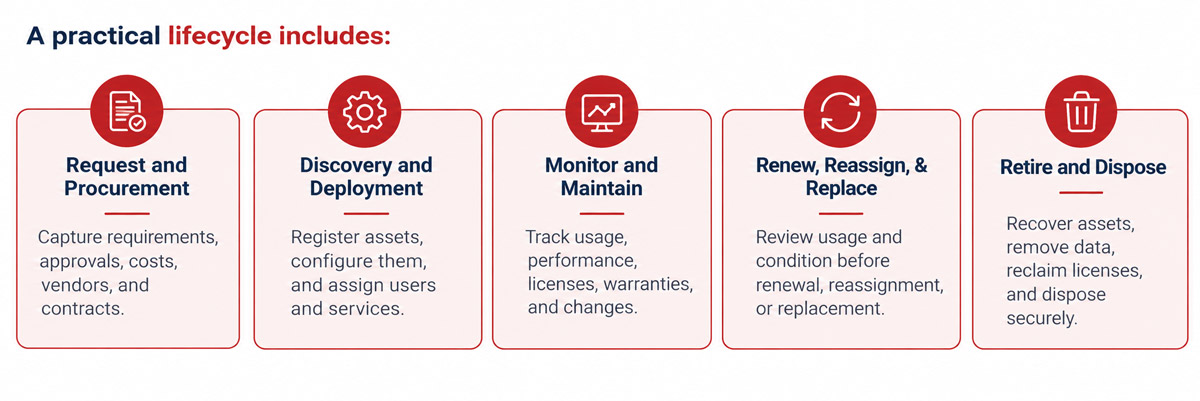
- Support IT asset lifecycle management: Track assets from request and procurement through deployment, maintenance, renewal, reassignment, replacement, and secure retirement to improve utilization and control costs.
- Turn asset data into better IT decisions: Connecting asset, financial, usage, procurement, and contract information gives IT and business leaders a reliable foundation for budgeting, technology planning, and investment decisions.
ITAM vs ITSM Difference
Understanding ITAM vs ITSM differences is important because the two disciplines serve different purposes while working closely together.
- ITAM focuses on the technology assets an organization owns or uses, including their cost, ownership, lifecycle, usage, licensing, and status.
- IT Service Management (ITSM) focuses on delivering and supporting IT services through processes such as incident management, service requests, change management, and problem management.
The two work together. For example, when an employee raises a support ticket for a laptop, ITSM manages the service request while ITAM can provide information about the device, assigned user, configuration, warranty, and software installed on it. ITAM data can also support a CMDB by providing information about assets and their relationships with business services.
Understanding IT Asset Lifecycle Management
IT asset lifecycle management covers every stage of an asset’s journey through the organization.
Managed ITAM Services: Automating Asset Management
As enterprise technology environments expand across offices, remote users, cloud platforms, SaaS applications, and connected devices, manually maintaining asset records becomes increasingly difficult. Managed ITAM services provide continuous discovery, monitoring, reconciliation, reporting, and lifecycle management, helping organizations maintain accurate asset data without placing the entire operational burden on internal IT teams.
Managed ITAM services can help IT teams:
- Discover New Devices and Software Automatically: Continuously identify hardware, software, applications, and other technology assets across the enterprise.
- Keep Asset Records Accurate and Up to Date: Automatically update asset information as devices, users, configurations, and software change.
- Detect Configuration and Ownership Changes: Identify changes to device configurations, assigned users, locations, or installed software for better asset control.
- Identify Unused and Unauthorized Software: Flag applications that are inactive, unapproved, duplicated, or operating outside established IT processes.
- Monitor Software License Utilization: Compare license allocations with actual usage to identify opportunities for reclamation, reassignment, or consolidation.
- Automate Renewal and Warranty Alerts: Notify IT and procurement teams about upcoming software renewals, contracts, warranties, and support expirations.
- Track Assets Approaching End of Life: Identify aging hardware and software so teams can plan replacements, upgrades, and retirement activities.
- Reconcile Inventory Across IT Systems: Compare asset information across ITAM, ITSM, endpoint management, procurement, and financial systems to identify data gaps.
- Generate Asset and Compliance Reports: Provide current reporting on asset inventory, licenses, lifecycle status, usage, costs, and compliance requirements.
IT Asset Management MSP Support for Growing Enterprises
As IT environments become more distributed and complex, organizations need continuous visibility into their hardware, software, SaaS applications, licenses, cloud resources, and associated costs. IT asset management services help bring this information together, while managed ITAM services provide the ongoing discovery, monitoring, license optimization, and IT asset lifecycle management needed to keep asset data accurate and actionable.
Synoptek helps organizations build and manage ITAM environments with the right combination of discovery, automation, governance, reporting, and integration across ITSM, procurement, security, and financial systems. As an experienced IT asset management MSP, Synoptek can help enterprises strengthen shadow IT visibility in enterprise environments, optimize software licenses, improve hardware and software asset tracking, and manage technology from procurement through retirement.